

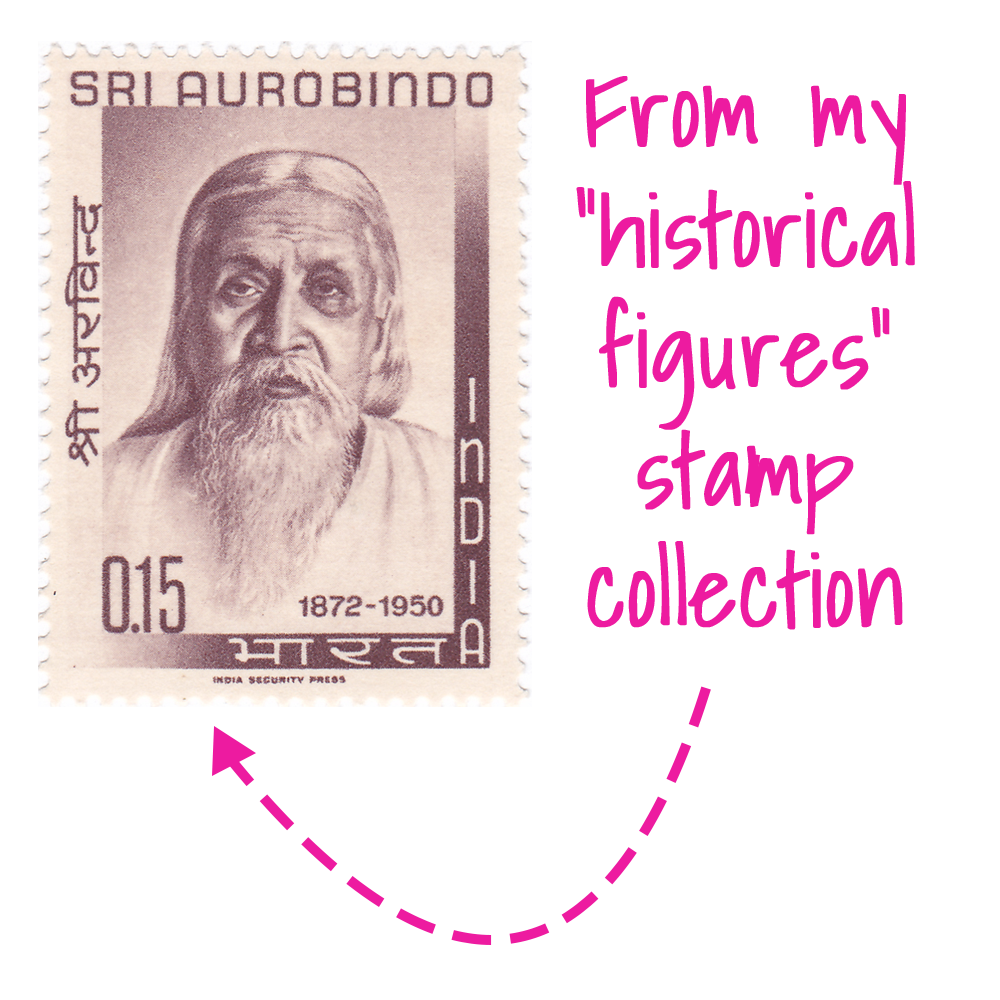
Anyone who has ever sat in front of a computer trying to bring forth a tempest of chaotic ideas into neat, orderly words and phrases knows that sometimes it helps to look outwards to make sense of what is going on within. In short, writers get stuck all the time. On the 15th of August, 2023, when India celebrated its 76th Independence Day, I attended a play about a man I knew of well enough. However, I didn’t realize how influential his experiences would be and how relatable his journey would be to me as a writer. Sri Aurobindo Ghosh (1872 – 1950) was a man of great renown and even after decades of his passing, his spirit continues to educate and inspire.
An Indian yogi, philosopher, nationalist, poet and prolific writer, he was instrumental in India’s struggle against colonial rule. Coincidentally, his birthday falls onto the anniversary of the country’s rebirth as a free and democratic nation and we celebrated 150 years of his immortal legacy. The Maharaja Sayajirao University of Baroda, which I currently attend as a graduate student, proudly hosted a multimedia show on the life of Sri Aurobindo yesterday. The city of Vadodara (formerly known as the Princely state of Baroda) has a deep tie with the maharishi and so this event was as nostalgic as it was significant. Allow me to present a whirlwind geographical biography of Sri Aurobindo, to make the points I’m about to highlight in this post a bit easier to comprehend. Born in Calcutta during the British Raj, he soon moved to London with his family as his father believed that British culture was superior and he had great ambitions for his sons who he wished would join the illustrious civil service upon completing their education.
Rebellious in all the good ways, Aurobindo decided to spend a sizeable chunk of his career in Baroda under Maharaja Sayajirao where he wrote articles, speeches, taught, and served several scholarly positions in the royal court. The fire for patriotism and independence burned brightly in the young man during this period which is evident from his articles for Indu Prakash and Bande Mataram — some of the pioneering nationalist newspapers at the time. This flame would inspire a generation of freedom fighters in India. However, in his sunset years he converted from active politics to spiritualism and Pondicherry became his home. It is here that he wrote the epic poem Savitri — an epic poem containing 24,000 verses based on the story of Savitri and Satyavan from the Mahabharata.
Fun fact: My first book Near Touch has an easter egg related to Savitri that some of my keenest readers were quick to understand.
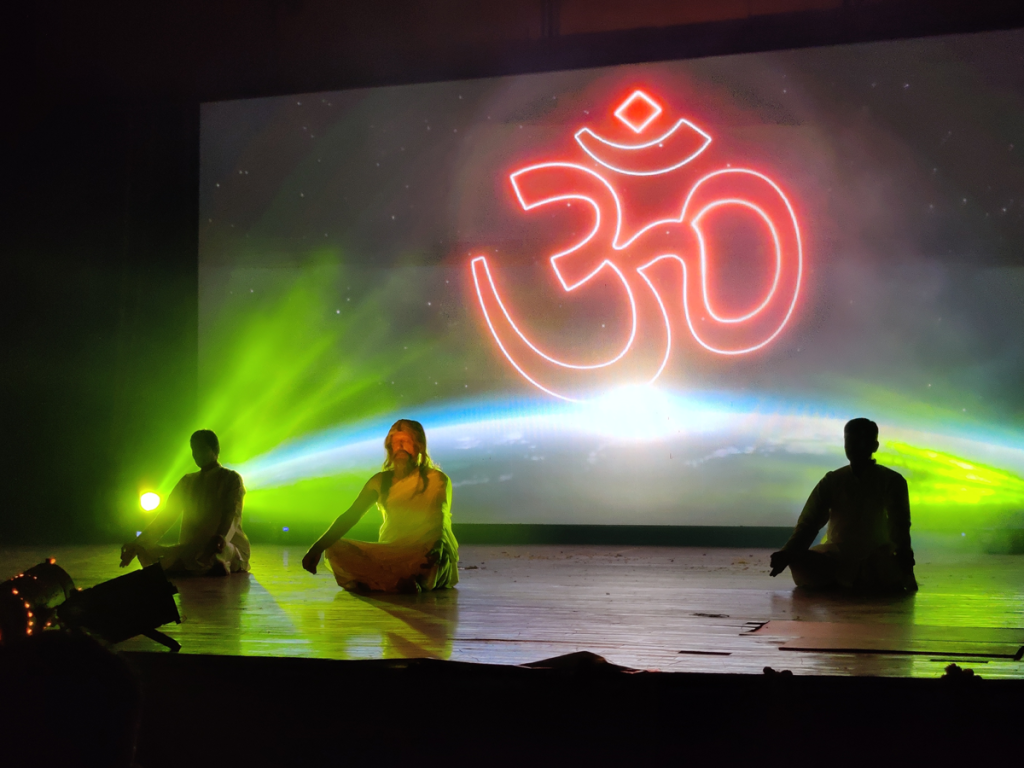
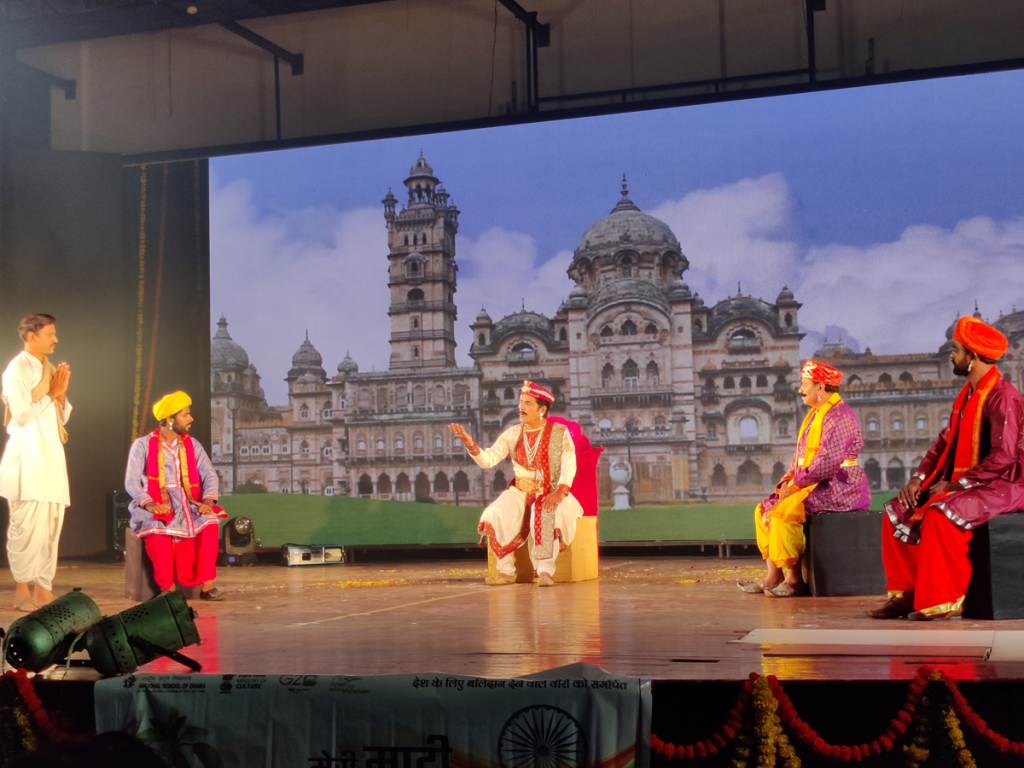
Sri Aurobindo’s life, both as a nationalist and as a writer, has been an adventure we can only hope to learn from. The multimedia show I attended was a delightful amalgamation of history, information, dance, and drama executed in a brilliant shower of music, light, and sound. Gujarat Sahitya Akademi (ગુજરાત સાહિત્ય અકાદમી) deserves immense praise for their efforts to bring the legacy of Sri Aurobindo Ghosh to the masses. Without it, I would have remained ignorant of the many lessons that this great writer left behind.
Choosing infinity
Aurobindo considered the lotus flower to be a representation of the divine. A perfect manifestation of the supreme and later adopted it as his symbol. The following lessons are petals that form a fractal of that divine knowledge that I came to appreciate as a writer.
1. Pain is the hammer of the gods
More often than not when a person chooses to follow a creative field, there are times where one wishes for a simpler, more direct route to happiness and success. I’ve been asked by my family why I would choose a difficult career like writing where the odds of succeeding with a bestseller are akin to winning a lottery, when I could be slowly but surely climbing the corporate ladder. Aurobindo faced a similar situation. On one hand, his parents’ hopes and dreams for him were grand – joining the civil service and living a comfortable life – and on the other, he wanted to do something for his enslaved nation – which would necessarily mean sacrifice and struggles. Being of brilliant intellect, he secured 11th position out of 250 candidates in the ICS exam but purposely failed the horse-riding test to follow his own path, no matter how seemingly difficult it was.
Therefore, if you truly believe writing is your passion, then follow it with all your heart. Whenever thoughts of choosing an easier option invade your mind, console it with Aurobindo’s example. It led him to not only become one of the most influential people of his time, but also immortal forevermore in the collective conscious of the country he served. That is far greater than any creature comfort on the planet.
2. Ignite and inspire young minds
On the discussion of his prolific writing career, Aurobindo was often asked where he got so much inspiration to communicate through his chosen medium — print. A famous Gujarati political writer and essayist, KM Munshi, once inquired whether he should follow Macaulay’s works to improve his command over the English language. Aurobindo’s answer was profound. “By following someone else’s work, the best you can hope for is to become his shadow. Find your own voice and you shall unlock greatness within yourself.”
As a professor in Baroda College and a lifelong teacher, he continued to learn more about the nature of the universe through philosophy and yoga, but the most poignant strides he made in his writing career were due to his mission to teach and inspire others to see the best in themselves.
3. A different perspective
This short story was highlighted very beautifully in the multimedia show and I would love to present its summary. One day in the city of Baroda, the Maharaja and Aurobindo were travelling through the market. An old lady seemed to struggle with something. The Maharaja promptly rushed to her side and they exchanged pleasantries. The old lady hesitated but yielded upon the Maharaja’s insistence. Business that day had been slow, and she required help hoisting the basket of dried cow dung cakes she was selling as fuel on her head. In a period where society was divided by strict rules of caste, a Maharaja touching dung was considered sacrilege. However, Maharaja Sayajirao, being the progressive and kind ruler that he was, helped the old lady nevertheless. “No work is small,” he said. Beaming with tears of heartfelt gratitude she went home after this interaction. When the magnanimous ruler returned to Aurobindo, he found the man smiling softly to himself.
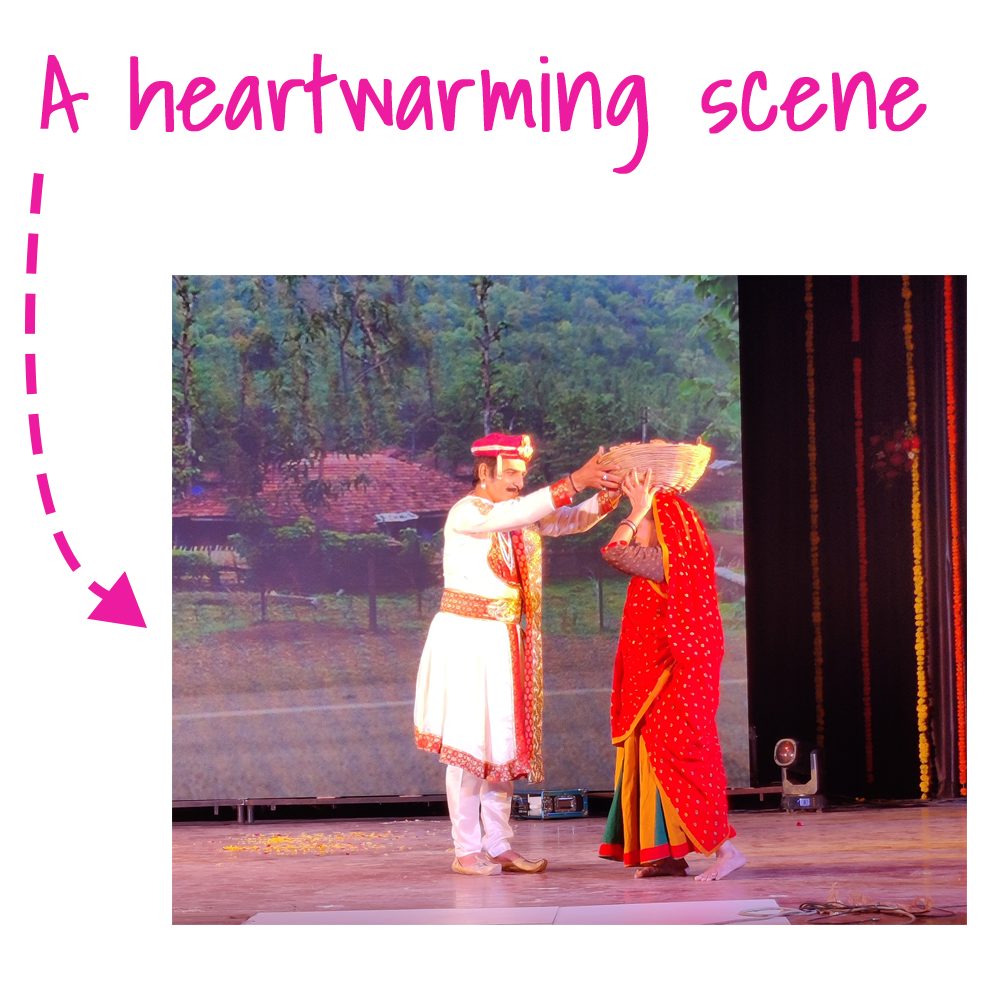
Thinking that Aurobindo was laughing at him, the Maharaja called him out immediately, “Do you think it was beneath me to help hoist that basket on the old lady’s head? Is that why you are smirking?”
Aurobindo in his profound wisdom replied, “While that was a noble act, your majesty, I do believe that a king’s dharma should be to reduce the burden of his subjects, and not help them bear it.”
The Maharaja understood the deep message Aurobindo’s statement carried and spearheaded many efforts to alleviate the suffering of his subjects in the Princely state of Baroda. The university I attend is a proud institution that still carries that responsibility today. As a writer, it struck me that merely shifting one’s perspective can lead to inferences that are extraordinary. To bring forth such ideas is also an important duty of a writer.
4. Spiritualism and optimism
Even in the harshest and most difficult times in his life, Sri Aurobindo never abandoned his spirituality and positive outlook on life.
“In 1908, Khudiram Bose and Prafulla Chaki attempted to kill Magistrate Kingsford, a judge known for handing down particularly severe sentences against nationalists. However, the bomb thrown at his horse carriage missed its target and instead landed in another carriage and killed two British women, the wife and daughter of barrister Pringle Kennedy. Aurobindo was also arrested on charges of planning and overseeing the attack and imprisoned in solitary confinement in Alipore Jail.”
Alipore Bomb Case (1908 – 1909), Sri Aurobindo Institute
It was in solitary confinement, a situation that would drive weak-willed minds insane, where Aurobindo found enlightenment through meditation. Swami Vivekananda’s words and philosophies cemented themselves in Aurobindo’s head and heart, which lead him to take a step back from his political ideologies and fully embrace spirituality. He believed that the four walls of his cell were the four arms of Vishnu, holding him and protecting him. God was to be found in trees, rocks, and the very air we breathe. I believe that faith and optimism is vital to a writer who is often terrorized by his own demons of self-doubt and fear of uncertainty. One must believe in one’s ability to be a good writer in order to find true fulfillment in the art.
5. Finding meaning outside your comfort zone
This is a personal observation that I made not directly through the play on Sri Aurobindo’s life but because of it. I did wonder if I should go and attend or not. None of my friends were going and it was on the tail-end of a rather relaxing holiday; about a person from a bygone era to boot. However, I can’t stress how glad I am that I went. Not only did I unexpectedly find pearls of wisdom and reassurance from a great writer, I connected with my own roots in a small, yet meaningful way as well. Some of you reading this might know that my family has generational ties with the city. The Mairals from my maternal side have been influential in the growth and development of Vadodara. I was a little nervous to be going to an event of such massive scale alone. Who would I talk to? What would I do? But to my utmost delight I found myself seated next to Dr. Rajesh Kelkar, a professor of Hindustani classical music at the university. He turned out to be my maha-guru as he had taught my music teacher many years ago. Narrating a story about my family’s historic Ganapati temple in Wadi, Vadodara, the good professor gave me a piece of my heritage that even my mother had no idea about. I will share more stories about the deep ties I have with the history of the city in future posts.
After the show ended, I waited backstage to interact with the immensely talented Jay Mehta who played a young Aurobindo in the show. Intrigued by an announcement by the director of Gujarat Sahitya Akademi regarding the actor postponing his performance in the US just so he could play this role in Vadodara, I wanted to know his motivation and reasoning for the same. His answer left a furrowed impression on me.
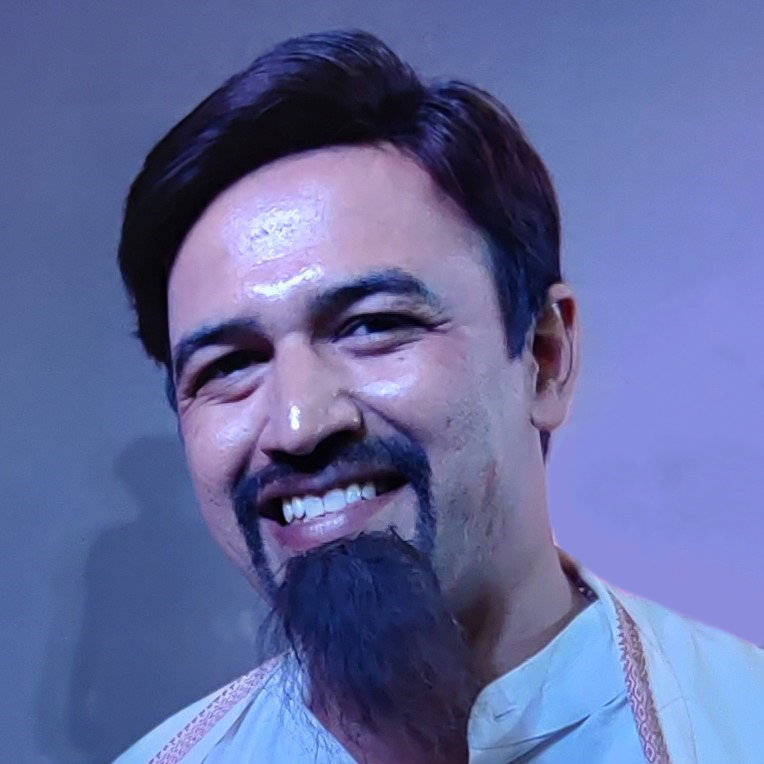
“Sri Aurobindo’s teachings of Yoga and morality have inspired me immensely. Sometimes we must practice our art without the want of gain but simply for the joy it gives us.”
Jay Mehta, Actor
This aligns perfectly with the eternal words of the Bhagavad Gita and truly brings the message of Sri Aurobindo to a full circle. Throughout his life, he worked for the betterment of others without worrying about his own comfort. Had I stayed in my comfort zone, I would never have connected with such vibrant personalities like an inverse scenario where Aurobindo had passed the ICS exam to become a civil servant.
No compromise!
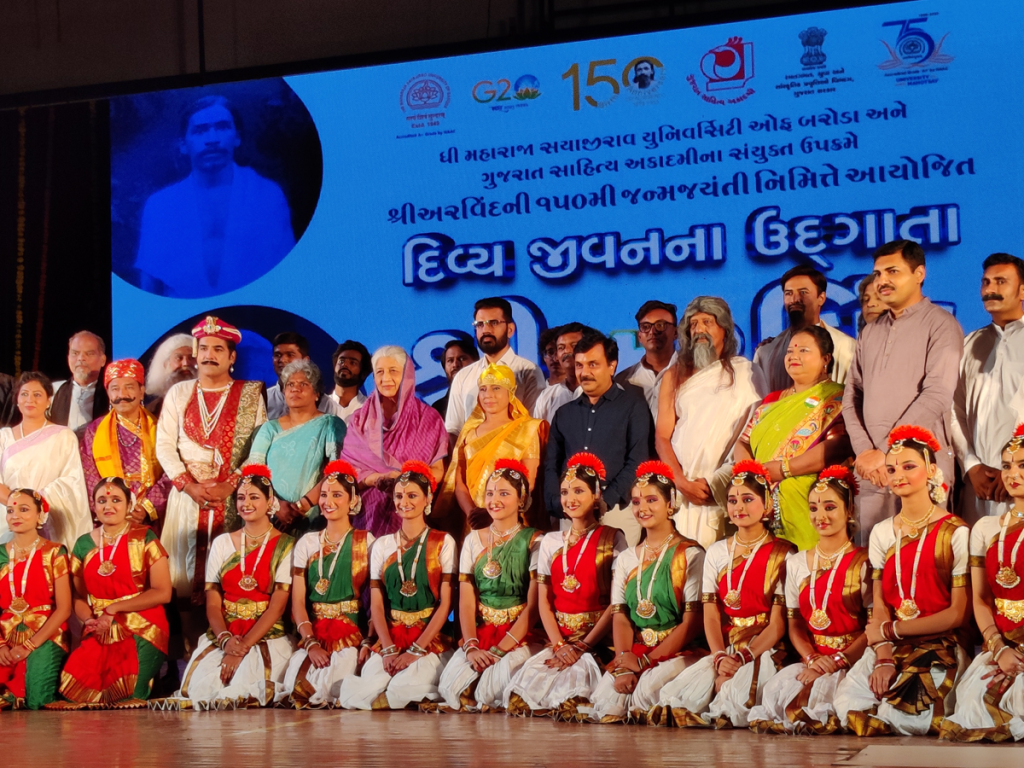
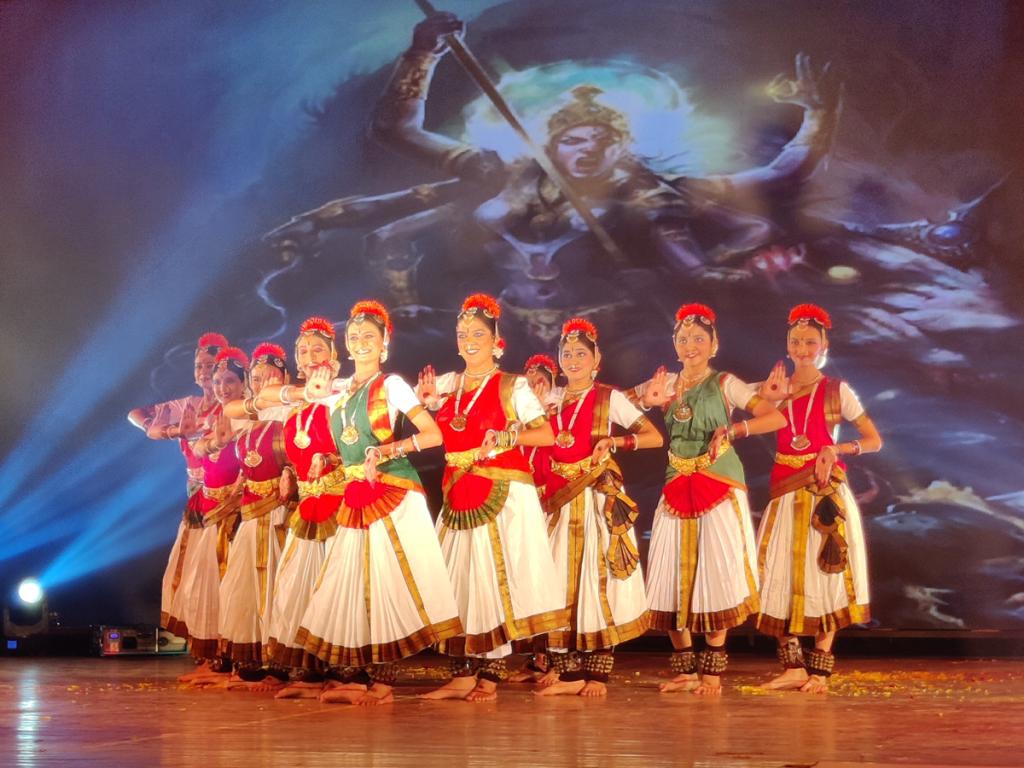
Echoing one of Sri Aurobindo’s boldest sentiments on Purna Swaraj (complete independence), I would like to extend a heartfelt note of gratitude towards all the people and their respective organizations who collaborated to bring the story of one of the country’s greatest sons to life. There was certainly no compromise by the Gujarat Sahitya Akademi in composing the multimedia show as every actor gave their best. The mesmerizing Bharatnatyam performances (some even choreographed by MSU’s Faculty of Fine Arts) added a distinct layer of allegory to the show that both entranced and entertained.
It was a great honor to have Rajmata of Baroda, Her Highness Shubhanginiraje Gaekwad as the chief guest for the event. Her regal presence brought a homely feeling to the show considering how closely Sri Aurobindo was tied to the royal family. Lastly, I would like to thank Dr. Niti Chopra, dean of the Faculty of Journalism at MSU for encouraging me to attend this wonderful event on India’s 76th Independence Day.
Some riveting moments from Sri Aurobindo, the dance-drama multimedia show hosted by The Maharaja Sayajirao University of Baroda.

Resources
- Britannica, The Editors of Encyclopedia. “Sri Aurobindo“. Encyclopedia Britannica, 15 Aug. 2023.
- Sri Aurobindo Ashram website; Writings – Savitri – A Legend and a Symbol.
- Sri Aurobindo Ashram – A Pilgrimage – K. M. Munshi’s tribute to Sri Aurobindo, The Hindustan Times, 15 August 1952.
- Sri Aurobindo’s Life in Baroda (1893-1906) – Sri Aurobindo, A New Dawn.
- Alipore Bomb Case (1908 – 1909), Sri Aurobindo Institute.
- Gujarat Sahitya Akademi – Honoring the legacy of Sri Aurobindo.
- The Maharaja Sayajirao University of Baroda – Faculty of Journalism and Communication.
- Pink lotus, flower collage element from Rawpixel.
- Stamp of the Indian spiritual teacher Sri Aurobindo (1872 – 1950). Released on August 15, 1964.
 Gauravaaditya
