


Foraying into practical, real-world experience after four semesters of rigorous academic work is a powerful way to bookend the graduate program for Journalism and Mass Communication at The Maharaja Sayajirao University of Baroda. The choice of field is as vast as the subject itself and one must balance one’s career ambitions with exploration of new areas within it. So, with clear resolve, I opted to deepen my understanding of Corporate Communication specifically within the public sector in India. As a result, my internship at the prestigious Gujarat Refinery of Indian Oil Corporation Limited (IOCL) materialized in Vadodara for a tenure of sixty days from the 17th of February, 2025 to the 17th of April, 2025, under the skillful expertise of career veteran Dr. Ciny Mathew Philip, Deputy General Manager, Corporate Communications and CSR.
Through numerous projects straddling the careful line between internal corporate communication and external corporate social responsibility efforts, I learned how to synergize effective communication through purposeful words and visually appealing presentation. The present internship report comprises of five major projects undertaken which highlight the key learnings of my tenure at IOCL. Supplementary documents such as posters, social media posts, scripts, textual documents, and others are provided in the report as well if under the public domain.
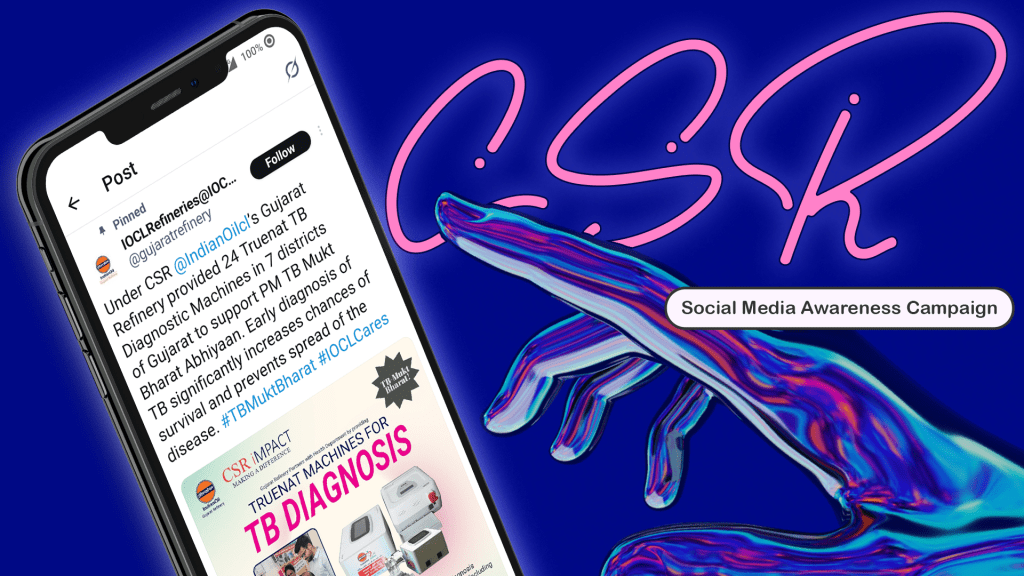
Check out my Behance project on the internship at IOCL if you're a visual learner! Just click on the image above.Project 1: Post-Crisis Communication Safety Videos
While we’ve learned in depth about crisis communication as a subject, the fact that it is a dynamic and continuous process even after a few months have passed since the incident, was the focus of my first project at Gujarat Refinery. On the 11th of November, 2024, an explosion and fire in the benzene storage tanks caused two fatalities and one injury at the refinery. This received major press coverage and crisis communication protocols were swiftly initiated. After the incident and its fallout had been sufficiently brought under control, a cause assessment was conducted by the Fire Safety Department at Gujarat Refinery. This resulted in a detailed case study report that gave probable causes, a description of the incident, potential solutions, and prevention mechanisms to avoid such an incident in the future. The case study report was a highly technical document that required critical prior knowledge of plant engineering and a scientific background for maximum comprehension.
The contract workers and engineers working at IOCL needed to be made aware of the details of the incident with the aim of preventing future accidents. Therefore, it was decided that a 2D animated video would be made to clearly explain the specifics of the incident and its solutions to make sure that there is a clear understanding among the persons involved in the functioning of the refinery. Similarly, two other safety incidents were recognized which would be made into short documentary films to create awareness. These involved a fatality due to an operational accident involving a FARANA crane and property damage due to a minor fire in the Naphtha Splitter Reboiler Furnace. In total, these three incidents were chosen to be made into three distinct short films of about five minutes in length.
After clearing the rigorous security clearance requirements at Gujarat Refinery which is overseen by the Central Industrial Security Force (CISF), I was registered as a Vocational Trainee in the Administration Building under Dr. Ciny Mathew Philip in the Corporate Communications department. In the first few days of the internship, I read the Annual Reports of IOCL from the years 2024 and 2023, analyzed the previous pan-India CSR Reports focusing on the water conservation and rainwater harvesting efforts of Gujarat Refinery, and studied the social media handles of IOCL namely on X (formerly Twitter), Facebook, Instagram, and LinkedIn. Keeping the strict security and safety regulations of IOCL and its global public image in mind, I was tasked with creating scripts for the Safety videos involving the three incidents at Gujarat Refinery.
Using my skills to translate highly technical jargon and sharp scientific language into a more easily digestible format for a short film was a challenge that I was eager to undertake. I carefully read and analyzed the case study reports to create scripts that a third-party animation agency could follow and create visually engaging and comprehensible videos. I also created storyboards wherever required to better convey what the scripts represented. I coordinated with the agency to ensure that the creative aspects of the videos and the quality of animation were up to IOCL standards, giving feedback wherever necessary. These underwent multiple rounds of revision to ensure that the message was clearly conveyed.
Along with maintaining good relations with the press and minimizing the negative fallout from crisis situations in major organizations, I learned that taking responsibility to prevent such incidents from happening is an integral part of communication. Technical skills and creative talent are two distinct spheres that must be brought together to create effective and impactful communication, which is a task for a communications professional.
Key Lessons
- Crisis communication is a continuous process that isn’t complete just because the incident has been successfully contained. Prevention and raising awareness through effective post-crisis communication are equally important steps.
- Ensuring that creative flourishes and effects in the final communication should not embellish or overshadow the technical aspects of an incident is paramount.
- Converting a scientific document to an audio-visual script is a foundational step in the production of the final video. If it is strong, communication with the animators becomes easier and more productive.
Project 2: Performance Highlight Report (PHR) and Other Internal Communication
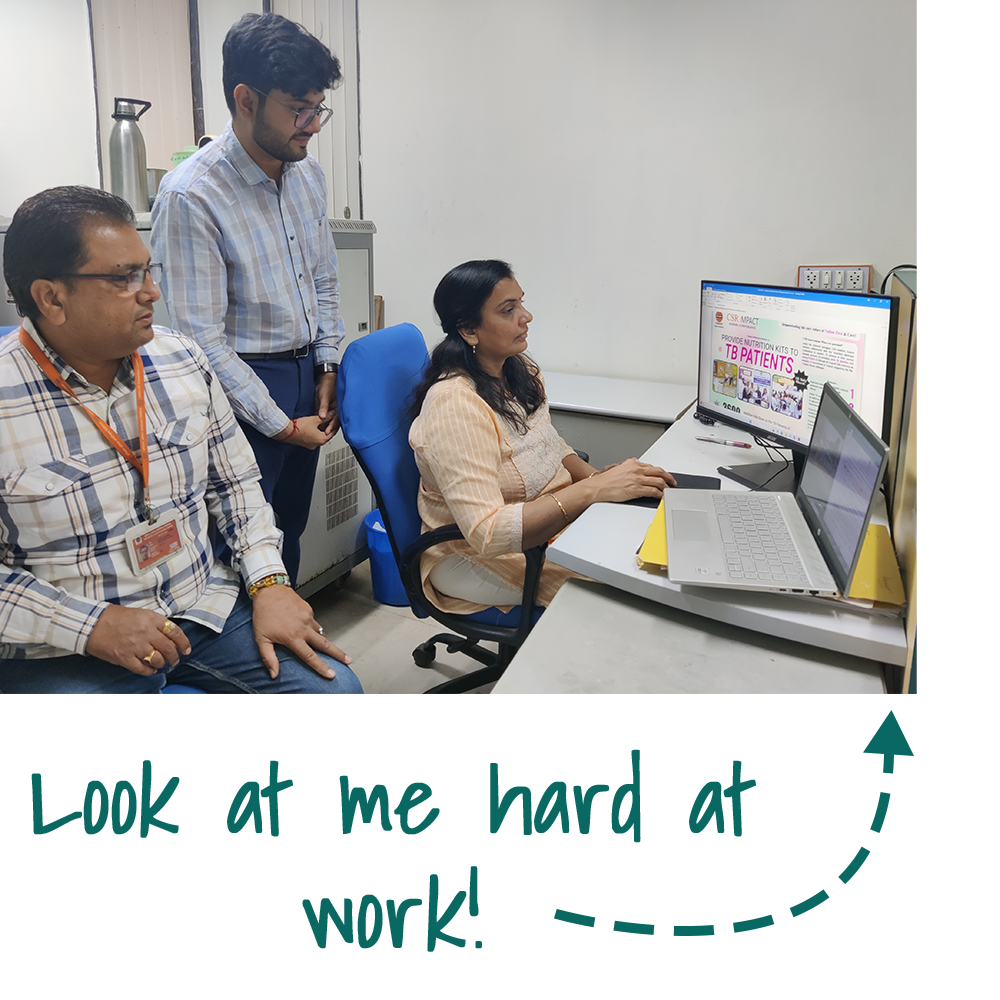
For the creation of the Annual Reports that I had read during my first week of the internship, the Communications department from every refinery in IOCL sends a detailed Performance Highlight Report for that financial year. This document summarizes the key events and endeavors that have taken place at their respective locations from which the Corporate Communications team at the Headquarters in Mumbai selects the most important stories to highlight. They are compiled from news stories filed for the IndianOil Xpress which is an in-house magazine for the Indian Oil Corporation. Assisting in the very first step of this decentralized task, I read and summarized over twenty event summaries and presented them in a single document for review. Major CSR activities of Gujarat Refinery along with important milestones achieved, visits by dignitaries or key personnel (VIPs), HR initiatives, and other key events were identified and tagged with required photographs in a specific format including captions from the official e-gallery of the IOCL employee portal.
Along with this report, I also helped draft and proofread various other important textual documents throughout my internship. The various speeches by the Executive Director and Refinery Head (ED&RH) of Gujarat Refinery, Mr. Biplob Biswas, on the occasion of International Women’s Day (8th March 2025), Management Week (7th March to 14th March 2025), National Safety Week (4th March to 10th March 2025), and monthly JR Communique which is a message from the ED to all the employees at the refinery, were proofread with editorial recommendations wherever necessary. I also proofread some official legal documents involving the tendering of certain CSR initiatives undertaken for FY24-25, allowing me to understand the intensive documentation process and format required for such memorandums of understanding (MoUs) to be signed by an organization. I worked on many such internal communications which involved major hierarchical, top-down communiqué from management to the employees during my tenure at Gujarat Refinery. I also helped with translations wherever necessary from English, Gujarati, and Hindi.
Furthermore, I designed an advisory message to be communicated via email to the employees of the refinery, informing them of the news dissemination protocol at IOCL, whether in traditional news publications or on social media. This was drafted from an email that highlighted the key action areas and presented the information in a visually appealing and easy-to-understand format.
Key Lessons
- Internal communication has a lot of intricate details to be kept in mind to ensure that there is no miscommunication or lapse in important information.
- While design can be important in certain situations to make communication more impactful, the choice of words is to be kept in mind as well to ensure the effective transmission of desired information. The medium becomes the message which is Laswell’s illustrious concept of communication in action.
- A communication professional has to anticipate the needs and tonality of senior management members to better reflect their narrative styles while drafting communication for them. For this, one must be a keen observer and an attentive listener.
Project 3: Major Events at Gujarat Refinery
My tenure at IOCL coincided with many major national and international events such as National Safety Week and International Women’s Day, etc. The 43rd PSPB Inter-Unit Cricket Tournament 2024-25, hosted by Indian Oil Corporation Limited featuring eight competing teams from different oil and gas industries of India also began on 1st March 2025, at the Gujarat Refinery Cricket Ground in Vadodara. I contributed to these events in varying capacities.
For the Inter-Unit Cricket tournament, I collaborated with the contract videographer and photographer to optimize and shoot a video bite of the cricket players present. The hard light conditions made it difficult to shoot the video without making the interviewee uncomfortable but we managed to find the best possible location for the shoot. I also suggested interview questions to the Corporate Communications department which were posed to Mr. Prithvi Shaw, who is a cricket player representing IOCL. Later on, I collaborated in drafting a story release for IndianOil Xpress, covering the key aspects of the inauguration of the event.
For the occasion of International Women’s Day, I created a poster showcasing the women employees of IOCL and highlighted their Individual Social Responsibility (ISR) efforts and technical and managerial capabilities at Gujarat Refinery. This poster conveyed the official theme of the year from the UN – “For ALL Women and Girls: Rights, Equality, and Empowerment”. A slogan, “Empowered Women, Empowering Society” echoing one of IOCL’s founding principles of “Pehle Indian, Phir Oil” was also drafted to showcase the individual social responsibility efforts of the women employees of IOCL who go beyond their personal responsibilities and corporate dreams to create actual change in society. I chose a simple design for the poster to let the achievements of the employees shine. It was unveiled at the event held at the auditorium at Gujarat Refinery.
I also created a large-format poster purposed by the ED(CG), Mr. Sunil Kumar Sinha, for the mini-conference room which showcased IOCL’s Green Resolve and promise towards a sustainable future. This project involved many iterations until finally a suitable image was finalized. A wide-angle photoshoot was also arranged to cover the various infrastructures at Gujarat Refinery such as the New Administration Building and the under-construction LuPech plant.
Similarly, for National Safety Week (4th to 10th March 2025), I edited the story which featured the fire safety and awareness drill conducted to raise awareness among the staff for the correct protocols to be followed in the event of a hazardous fire. The employees were also asked to give feedback about the whole mock drill and purposeful participation in such activities conducted by the organization demonstrated the importance of fire safety measures, especially in sensitive industries such as oil and natural gas.
Key Lessons
- Application of journalistic communication skills is important while taking interviews, arranging photos, and drafting stories.
- The visual representation of internal communication should reflect the spirit of the organization and its employees for maximum impact. The placement of certain backdrops and logos are important signifiers of authenticity and invoke a formal atmosphere for the interview being conducted.
- It is important to ask meaningful questions to the interviewees in order to make them feel comfortable and ensure that similar points are not being repeated.
Project 4: CSR Posters and Tweets
With an aim to increase awareness about the CSR efforts undertaken at Gujarat Refinery both internally for the employees and externally for the stakeholders and beneficiaries, this extensive project was decided upon. I created six posters for individual CSR initiatives in the FY24-25 which would cover all the necessary details such as its features, impact, need, and benefits. This is an annual activity that is published by the CC&CSR department under the banner “CSR Impact”. Furthermore, I converted the crux of these posters into a single communication reflecting the fast-paced nature of social media, primarily on X (formerly Twitter), drafting the Tweets and the accompanying images to convey a cohesive message. Converting the text-heavy information into thematically consistent and visually appealing features was my principal goal.

Inspired by the UN’s official, vibrant development communication, these posters were finalized. They mark a transition from traditional design to a more dynamic and modern approach. Therefore, contrasting colors and the latest graphic design trend of creating monochrome and grainy artworks that highlight the key CSR initiatives such as the food delivery vehicle, the ultrasound machine, or the TrueNat TB diagnostic machine would be the first thing that is noticed by the viewer. Furthermore, the exact numerical, measurable impact of the initiative was highlighted using bold colors and large font to cover the most important aspect of the communication. Images from the event were also incorporated to further signify the importance of the same.
Following were the titles of the posters and X (formerly Twitter) posts:
- Eliminating Classroom Hunger – Providing Customized Food Delivery Vehicles to the Public Schools of Vadodara.
- Gujarat Refinery’s Initiative to Provide TrueNat Machines for TB Diagnosis.
- Providing Nutrition Kits to TB Patients.
- Providing Access to Rural Healthcare through Medical Camps.
- Providing Customized Stainless-Steel Food Vessels.
- Providing Ultrasound Sonography (USG) Machines to UPHCs (Urban Public Healthcare Centers).
- Providing Rural Healthcare through Ambulances in Villages
Since this detailed approach was required to incentivize the employees at Gujarat Refinery to be aware of their organization’s CSR efforts, it was received with widespread praise for its design and visual impact, with many noting that it is markedly different and fresh from IOCL’s usual communication. However, this detailed approach is not really suitable for the low attention spans of the internet and therefore trimmed versions of the same were created for X (formerly Twitter). To protect the privacy of the beneficiaries, their facial identities were blurred slightly. This sensitivity and attention to detail was a welcome learning experience. The body text of the Tweets was also drafted keeping in mind the current trends. However, in the end, a more formal tone that suits the overall theme of IOCL’s communication was chosen to better reflect the ethos and ideals of the organization. Instead of posting about all of the projects at once, a strategy to post about each initiative on a daily schedule was decided to maximize the reach of the communication.
Essentially, this project was a continuous one and there is a possibility that even more CSR projects that were undertaken in the first two weeks of April could be included outside of the specified time period of the internship for a total of 9-12 posters.
These designs increased awareness about CSR efforts and there was a 50% increase in engagement on X mainly in terms of views.Key Lessons
- Balance of design and exact communication is crucial and it is sometimes required to give more importance to the latter in situations.
- There is a clear difference between internal and external communication. There is a lot more emphasis on visuals when it comes to CSR initiatives to give maximum impact.
- Creating a cohesive content strategy is not just for content creators but for large-scale organizations as well in the digital age.
Project 5: Billing and Offline Documentation
While the day-to-day of internal and external communications involving the creation of reports, press releases, brochures, posters, social media posts, etc., are important, a sturdy and organized backbone of collaboration and record-keeping is essential to keep the operations running smoothly in a corporate communications team. I learned that one must be adaptable to new systems being introduced for billing and filing as well as these are significant when an overall review of financial and collaborative data is demanded. The process of filing a bill is different from organization to organization but the essence remains largely the same.
There are four major types of bills and payment receipts that are logged and maintained at the corporate communications department. Sponsorship, advertisement, banner and photography, newspapers and scanning, and miscellaneous. On the VIM (Vendor Invoice Management) portal the various details of each bill need to be uploaded in the correct order to ensure that there are no discrepancies. VIM is a centralized system for all financial processes at IndianOil. First, a request is generated after which it is approved using an approval document that covers aspects such as cost, event details, deliverables, and the signatures of all approving authorities from Human Resources, Corporate Communications, Finance, and lastly the Executive Director and Refinery Head. A confirmation email is then generated which is forwarded by the head of CC. An after-event bill or tax invoice is required after which the billing process is initiated for the release of funds. The ‘face sheet’ is printed which contains the technical and non-technical details of the transaction. These documents are then collated and sent to the IndianOil headquarters in Noida via post.
Records for up to five years are maintained at a time with the World Environment Day being the busiest season for the billing and offline documentation processes as over fifty print and television media are contacted to run thematically appropriate ads in their respective domains.
Key Lessons
- Record-keeping is an essential part of documentation at a corporate communications department.
- One must be mindful of all the details such as GST numbers, HSN codes, and exact bill amounts to the rupee when it comes to all financial transactions in PSUs – from regular contractual bills to massive CSR spending.
- One must quickly adapt to new systems in place and always provide prompt feedback if there are any issues with the management of bills and invoices.
Conclusion
My internship period at Gujarat Refinery, Indian Oil Corporation Limited was extremely fruitful and I learned various new aspects of the field of corporate communication, especially from the purview of a large Public Sector Undertaking (PSU) in India. One of the key lessons I will carry is always being mindful of balancing creativity with the right communication. Furthermore, the importance of working within the system cannot be overstated. The bureaucratic hoops one must jump through are not only essential for the safety and security of the organization and by extension its employees, but they also instill a sense of discipline and preparedness in everyone associated. Networking forms the backbone of the communications department which must navigate all perspectives in the organization with finesse. External communication is also very important to protect and project a cohesive and positive public image of the organization.
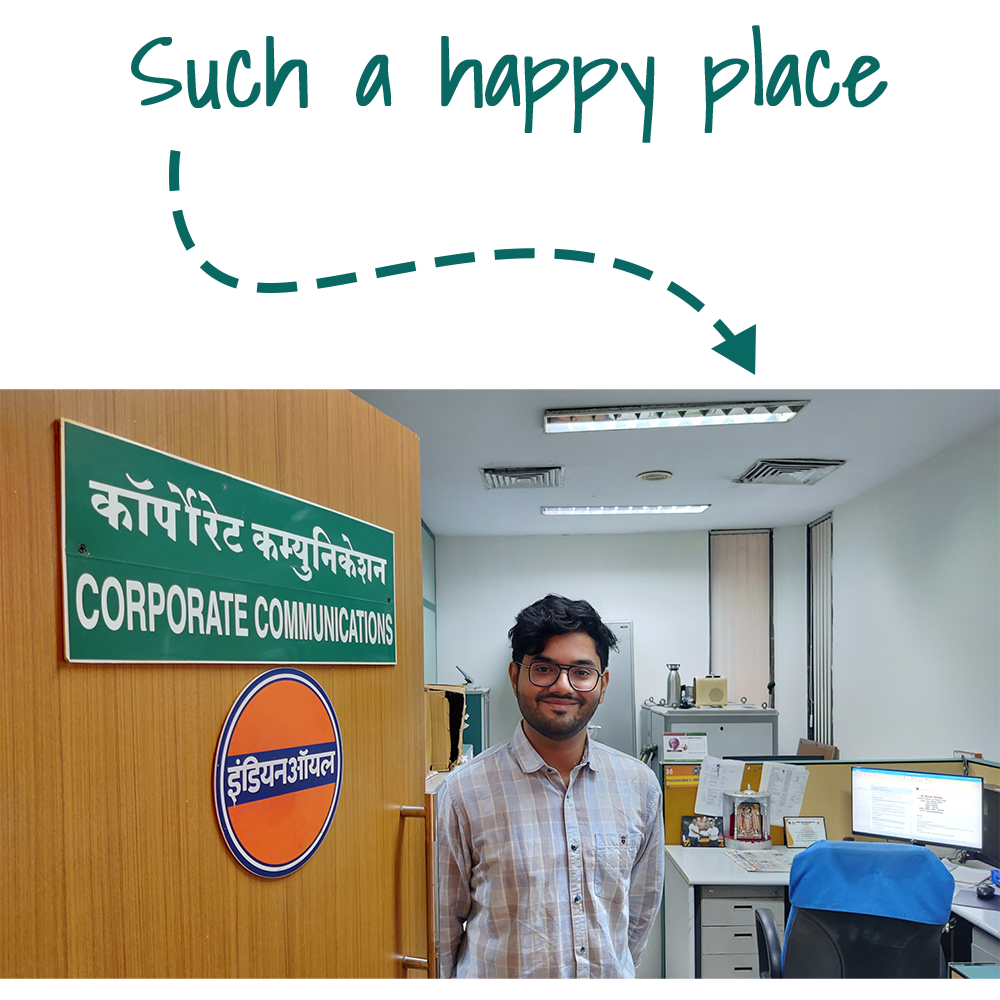
Working on highlighting the CSR efforts of Gujarat Refinery enabled me to understand the importance of major corporations in bringing social, economic, and environmental equity to underserved sections of society. The role of communication is vital in this endeavor and every choice from the selection of photographs and fonts to the overall appeal and exact information provided by a document is thus crucial, foundational, and dynamic.
In the end, I would like to thank Dr. Ciny Mathew Philip for her mentorship which has afforded me such an extensive view of the world of corporate communication. My heartfelt gratitude is also towards Mr. Prakash Amin and Mrs. Jayshree Shah from the Corporate Communication department who took me under their wing and allowed me to pitch potential design ideas and help in translating certain sections in various communiques. In the end, I would thank everyone at IOCL who collaborated with me on various projects and events, allowing me to learn from their collective experiences and guidance.
If given the opportunity, I would like to continue collaborating with IOCL in any capacity and continue my journey of growth and learning with the organization.
 Gauravaaditya