


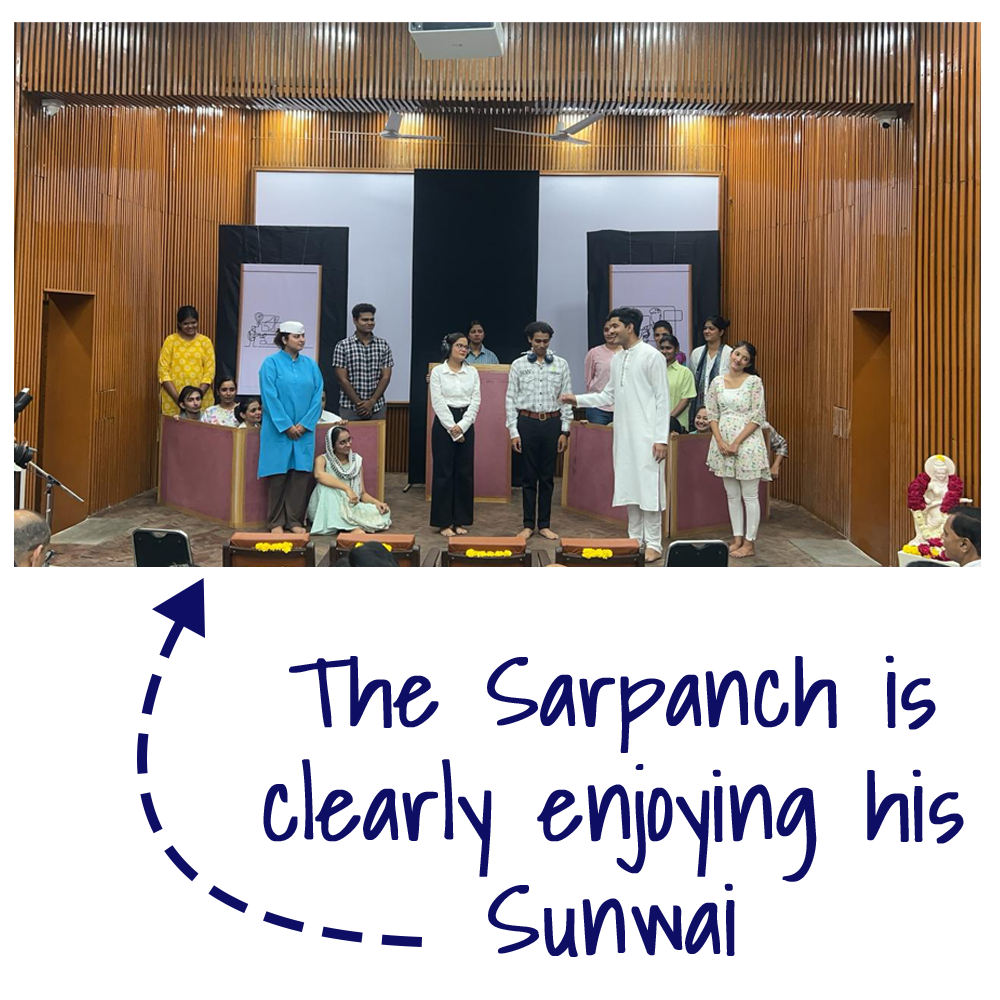
I seldom viewed acting as anything but an abstract art that I had admired but it was always tinged with a bit of envy. Actors get to live multiple lifetimes in one, and that is a precious gift that they choose. Through the theatre workshop during my second semester as a Masters student of Journalism and Communication, I played the role of a sarpanch set in a futuristic village which became a powerful peek through the curtains of my fantasy. In essence, I got to live a fraction of the life I had only imagined under the expert tutelage of Chari sir and for that, I’ll forever be grateful.
This is the written submission after the theatre performance at the university-level startup event that honored student innovators and entrepreneurs where Itivritt (2024) Startup Edition was also launched. You can read all about that here. There are five poignant questions I answered which focused on the impact the 30-day theatre workshop and subsequent performance had on us.
Q1. The devised performance on startup as a theatre presentation was aiming to examine if creative and performance idiom of storytelling could engage audiences. Enumerate your reasons, be it in favor or against it in view of the presentation staged.
One of the fundamental differences between films and theatre that was explained to us early on was that in theatre everything is live. The audience absorbs and reacts to the presentation in real-time. That is something I observed on stage during our performance. The audience was engaged in our play which was evidenced by each punchline earning a mirthful giggle and each moment of reflection receiving a sense of heavy contemplation. Honorable Vice Chancellor Prof. (Dr.) VK Srivastava also picked out several key moments from the presentation that contained the hidden aspects of startups in his speech later, which highlights that the audience was indeed engaged. The stories we told about a cycle repair man, a VFX startup, an online and offline key maker, a techno-social startup, and a futuristic village facing environmental extinction, all had a common thread of entrepreneurship and the celebration of the indomitable human spirit. It had been woven expertly into the stories that while being so distinct, had a powerful message that linked them together. Therefore, the presentation was a commanding idiom of storytelling that not only engaged the audience but also educated them. I recall some students from the Faculty of Pharmacy later discussing how both the play and the encouragement given to entrepreneurial students by the university had inspired them to finally pitch the drug they had been working on to the Startup Cell at MSU.
Therefore, I believe engagement that drives action is the highest form of justification we as a class could’ve ever received for our presentation.
Q2. The real training as a creative journalist begins when one starts associating with theatre in educational endeavors. Authenticate your personal journey during the contemporary theatre presentation including your contribution to your group.
From afar, creativity, journalism, and theatre do not seem like fruits from the same tree. However, my involvement in the presentation alongside my group from the very first day itself has given me the unique perspective that strings these elements in a beautiful line that requires nothing short of full immersion to discover. During the scriptwriting process, I elevated the idea of a village setting suggested by Nilanshi Jain and Khushi Shah to a futuristic one – to raise the stakes and think out of the box simultaneously. Creating a compelling and inspiring narrative from non-fiction was one of the key exercises that will surely enhance any journalistic writing I pursue in the future. The editorial process was grueling but it gave us an eye for separating the wheat from the chaff. Inculcating invaluable skills working as a team, I enjoyed the responsibility of learning and leading my team through the challenges of perfecting our presentation. Being the last group to perform, the pressure was palpable but together we managed to pull through even through the gut-wrenching possibility that our performance could be scrapped at the last minute due to quality concerns. We worked harder than the rest of our class so as to not let them down and what should’ve been a demotivational blow, instead, transformed into a fire that we carried with us on stage. I fully understood how holistic the process of transforming an idea into a performance had been in my professional endeavor as a communication and media student.
This outlook on unconventional creativity is the priceless lesson that I will carry not only in my journalistic pursuits but also in every facet of life.
Q3. Can startup stories thrive against the reel millennium? Can you evaluate your experience of telling stories in a real physical space as an antidote to the virtual space? Was this collective presentation able to reach the audience? Substantiate your observations based on the audience interaction and reactions.
The distinct edges of this question merit an evaluation just as defined in its findings and I find it imperative to begin the answer backwards.
This collective presentation was not only able to reach the audience but also inspire a spark within them as evidenced by my earlier anecdote about the undergraduate students of the Department of Pharmacy. The administrative staff of MSU was also keen on presenting how fundamental startups are to the economic engine of India through our play in several other faculties as and when Dr. Prashant Murumkar, Convener of the Startup and Innovation Cell of MSU, would visit them to educate the students about the plethora of startup initiatives at their disposal. The Vice Chancellor was kind enough to praise the concept of the performance as the need of the hour for the nation. The SSIP awardees present also expressed their pleasant surprise about the event having such an informative and entertaining presentation.
While telling stories in a real, physical space has its surreal charm that surpasses the glass barriers our virtual devices offer, it is hard to compare the two mediums in a world that is heading towards virtual reality. I visualize these paths having diverged some time before the turn of the millennium, realigning themselves in the near future. I do not view this dipole of human existence, real and virtual, at odds with one another. So, the question of the presentation being a “real” antidote to the “virtual” poison is moot. Both mediums of expression have a certain humanness at their core. The thrill of performing live was an unforgettable experience and the connection I felt with the audience was stronger than anything I’ve seen on a screen. However, it cannot be denied that my family, who couldn’t be there, were able to see my performance only because of the available recording. I forged another connection with them as they discussed the presentation with me. Therefore, I believe that both virtual and real expressions are not in competition with each other and as the world hurtles towards blurring the lines between these experiences even further, we may realize an altogether new emotional connection that defines our shared humanity.
Similarly, the “reel millennium” is not at odds with startup culture. In fact, many startups utilize this swift connection with their target demographic as if it were Hermes himself promoting mercantilism in a fast-paced, globalized world. While our presentation can be viewed as a detailed, sustained, and powerful embrace, a reel created by someone on the presentation is precise, light, and highly engaging; a light touch that stirs curiosity. A reel can be a precursor to the main event, but it can never replace it. Social media marketing is a powerful tool to communicate any message to the masses and I saw it in action during Kaafila 2024. The reels about the event created such a buzz that students were drawn to the fest in large numbers. Thus, startups cannot shun the reel millennium but if they combine detailed presentations such as plays or informational seminars with short teasers of the same, the result would be highly beneficial.
Q4. Describe your personal journey of filling the creative space and analyze the context, clarity and communication of the presentation.
The exercise of imagining being stuck in a glass bowl with chewing gum scattered around comes to mind as I ponder this question. It was certainly an emotional and creative growth that I experienced as I strived to fill the creative space of our presentation. I started off imperceptibly small and gradually expanded my imagination to occupy a spot alongside my classmates to make the performance whole without subsuming anyone else. To visualize this beautiful metamorphosis, I can only compare it to the development of an entire organism from a single cell. At first, the idea inside my mind grew as I put it on paper and utilized the key learnings from every exercise we did in the theatre workshop at the beginning of the component. Then, a few of my teammates combined their efforts into creating characters and their motivations. This underwent a process of refinement alongside the other groups, creating the start of a nexus that would ultimately emerge when we serialized our small presentations into the larger startup narrative. Therefore, my personal journey was almost as cathartic as a rebirth into the story of our presentation where I went from being acquaintances with my classmates to really knowing them as individuals.
The context of the presentation couldn’t have come at a better time with the country poised to become one of the largest economies in the world, having placed entrepreneurship at its helm. The launch of Itivritt, the lab journal of the Faculty of Journalism and Communication, with its theme of startup, technology, and innovation, also provided a suitable backdrop to the performance as well as being its very foundation. Lastly, the SSIP 2.0 event encouraging students to become entrepreneurs with the Honorable Vice Chancellor as the chief guest truly made the presentation contemporary in every sense of the word.
The play covered all the essential aspects of the entrepreneurial sphere which provided another layer of context as well as clarity on the subject. From entertainment, the environment, and health to innovation, social work, and digital technology, the presentation provided insights into the ups and downs of an entrepreneur’s journey, no matter his or her background. Having characters from all age groups also enhanced the context and clarity of the presentation, making the communication of the ultimate message – that entrepreneurs can come from anywhere – stronger and more concurrent. There were certain aspects that were detrimental to the clarity of the play, the major one being how different our part of the play set in 2039 was from the others in the anthology. It was a jarring transition that could’ve only been smoothened out if we had removed the futuristic component but due to the paucity of the time and my personal attachment to the story, it wasn’t something we were able to let go of. Our individuality became the sacrifice we made against the overall clarity of the presentation. However, I would like to believe that the threat of looking into a bleak future raised the stakes of the overall presentation, making the communicative message about the importance of “savior startups” and not just “mere commercial startups” feel more urgent.
There were some aspects such as voice clarity, pace, and emotional involvement of the performers that could’ve been more refined to improve the clarity and communication of the presentation but ultimately, the overall message was well-received. If we could’ve practiced in the hall prior to the performance, I feel the space constraints wouldn’t have been as apparent as they were in the end. Ultimately, I believe that the communication of the presentation was delightfully imbibed by the audience and the aim of the performers and the director was satisfied.
Q5. Does contemporary theatre or folk media as an academic tool merit to be continued as a strategic teaching exercise? Enumerate your reasons be it in favor or against it.
Contemporary theatre or folk media is absolutely essential as a strategic teaching exercise, not only in the field of communication but in every human endeavor. It is a medium of expression that teaches grace, humility, confidence, teamwork, and clarity of thought; all the while connecting with a deeper understanding of the self. I am proud to have been associated with a pedagogy that has a history that spans decades in this faculty and roots that stretch back to the dawn of civilization. I learned the value of leadership, growing a thick skin, using my body to express myself more keenly, and opening up my mind to the possibilities of communication through this module. However, it would’ve been helpful to have seen some of the earlier performances of the previous batches during the initial exercises to fully conceptualize the stakes of the course and inspire us to continue on in order to uphold the legacy of the faculty, especially when the going actually got tougher.
As Dr. Nidhi Shendurnikar rightly pointed out, the performance would’ve been a shadow of its actuality had it not been for the guidance of an able, disciplined, and strong-willed guru. Chari sir saw the potential in us as a group along with the inhibitions that were keeping us from fully realizing the same. With an unshakable resolve, he released us from the shackles of our own limitations and taught us many priceless lessons that I’m sure we will remember forever.
Therefore, it is absolutely imperative that this academic tool be continued as a teaching exercise for future batches of communicators to realize their potential and claim their rightful destiny as well-groomed individuals who are unafraid to express themselves in any situation.
Q6. Anything else you would like to specifically mention.
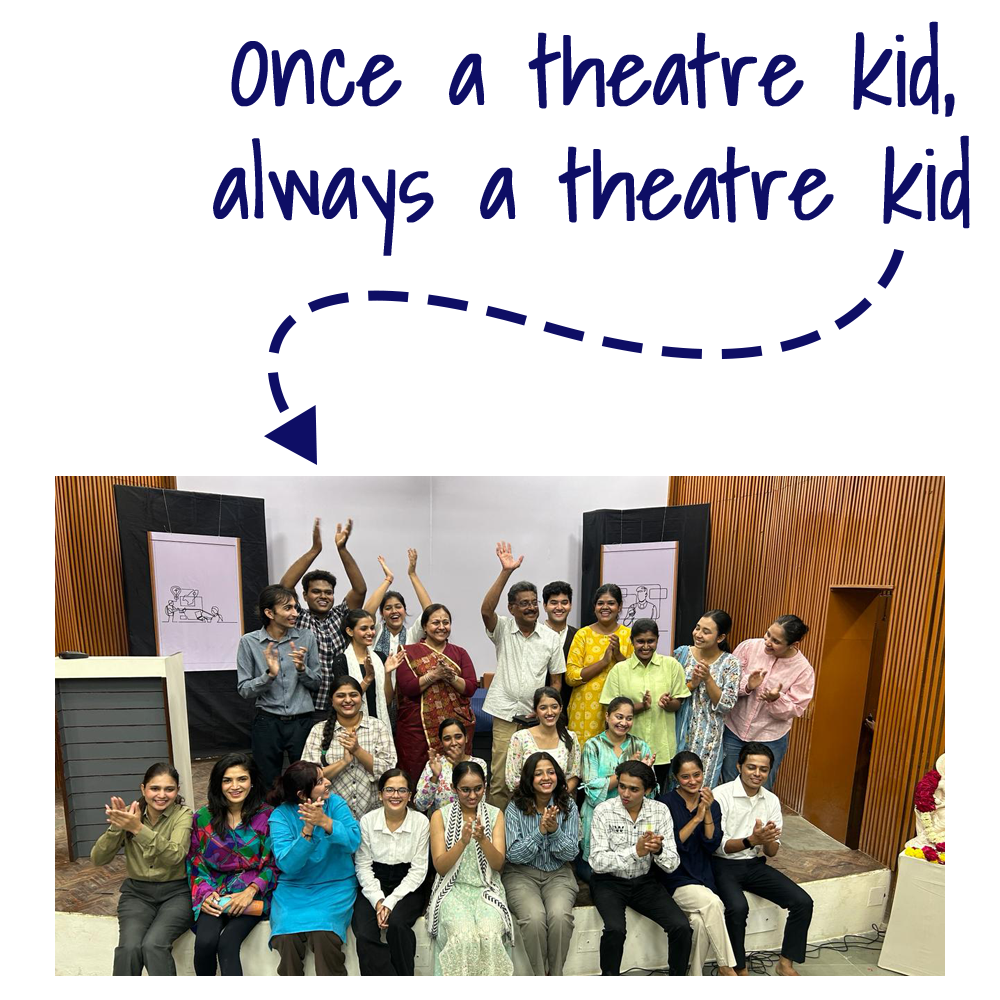
I would like to conclude this assignment the same way I began, bringing it full circle through gratitude. I acknowledge the contribution of the Faculty of Journalism and Communication at MSU in helping us become not only effective communicators but also complete individuals. The administrative staff of the faculty also merit mention here as they stayed with us later than their required hours as we practiced and helped us with all the nitty-gritty of the presentation. I would also like to thank Chari sir for being such an impactful guru to us all. This presentation will not only become one of the crown jewels of our respective portfolios but also a memory that we will cherish as a class.
 Gauravaaditya